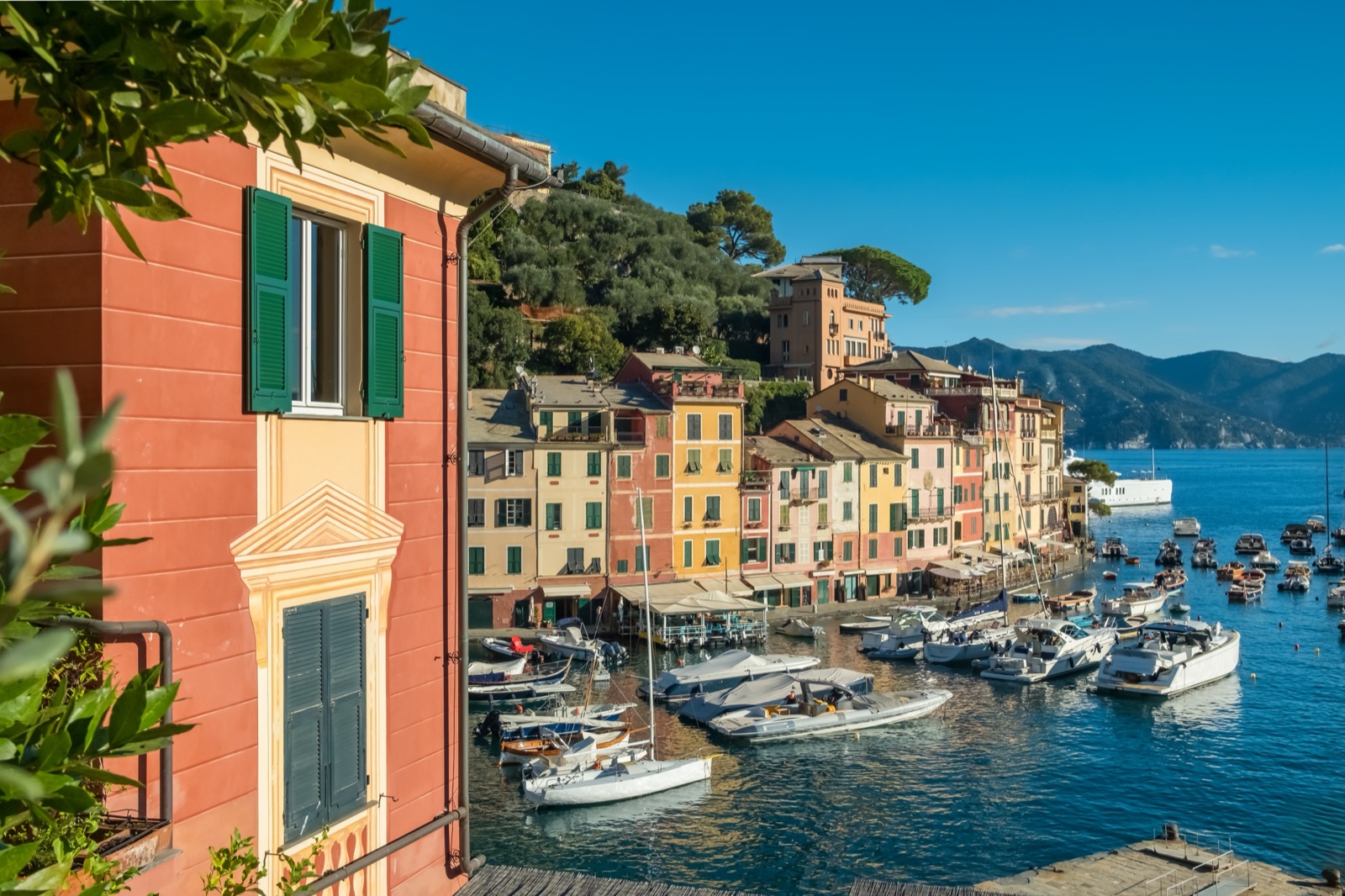
Portofino Food and Where to Eat: Pesto, Focaccia di Recco, Red Shrimp and Local Wine
Eating in Portofino means Ligurian food in one of the most expensive settings in Italy. The dishes to look for are local and simple: trofie or trenette with pesto made from Genoese basil, the paper-thin cheese-filled focaccia di Recco from the towns just west of the promontory, fish from the Ligurian Sea, including the prized red shrimp of Santa Margherita Ligure, and a glass of the small Portofino DOC appellation’s white wine. The setting is the price: a coffee for two at a piazzetta table costs €10 or more, and a fish dinner costs at least €100 a person. The good news is that the same food, often cooked just as well, costs much less a few kilometres away in Santa Margherita, Camogli or Rapallo, and there are cheaper ways to eat in Portofino itself.
This guide covers what to order, where to eat for each budget, and how to make the most of a meal on this coast. For the sights around the harbour, see the Portofino village guide.
What a meal costs in Portofino
Portofino has drawn European aristocrats since the late nineteenth century and is today a resort of the international jet set, and its prices reflect that. As a guide:
- A coffee for two at a piazzetta table: €10 or more.
- A fish dinner: at least €100 a person in season.
- A hotel room: from around €700 a night in season, which gives a sense of the scale of everything else.
You are paying for the view as much as the food. That can be worth it once, for a drink at sunset or a long lunch on the harbour, but for everyday eating there are better-value options covered below.
Pesto: the dish to order
Pesto is the signature sauce of Genoa and the whole Ligurian coast, and this is the place to eat it properly made. The pesto consortium’s recipe uses seven ingredients and nothing else:
- Genoese basil DOP, small-leaved and young.
- Extra virgin olive oil, ideally from the Riviera Ligure.
- Parmigiano Reggiano (or Grana Padano).
- Pecorino, specifically Fiore Sardo.
- Pine nuts.
- Garlic.
- Coarse salt.
The traditional method calls for a marble mortar and a wooden pestle, and the first written pesto recipe dates from the mid-1800s. Jars on supermarket shelves labelled “pesto genovese” often contain cream, cashews, seed oils or ricotta, none of which belong in it.
What pesto comes with
Pesto dresses trofie, the short twisted local pasta, trenette, a flat ribbon pasta, and mandilli de saea, thin sheets of pasta whose name means “silk handkerchiefs” in Genoese. It is also stirred into vegetable minestrone. Potatoes and green beans are not part of the sauce, but cooking them with the pasta is a classic Genoese way to serve it, and you will often see trofie or trenette served that way.
Genoa Airport’s own page on Portofino lists a plate of trofie al pesto by the sea among the things not to miss, and that is a fair summary of the region’s food in one sentence.
Focaccia di Recco
Focaccia di Recco col formaggio is the other dish to seek out, and it is quite unlike the thick, oily focaccia sold all over Liguria. It is an unleavened dough of soft wheat flour, extra virgin olive oil, water and salt, rolled into two very thin layers around soft fresh cheese, crescenza or stracchino. Each layer is rolled to less than a millimetre, and the finished focaccia is never thicker than a centimetre: crisp and blistered on top, with melted cheese inside.
Where it comes from
The focaccia gained IGP (protected geographical indication) status in 2015. Under the rules it can be made only in Recco, Sori, Camogli and Avegno, just west of the Portofino promontory, though you will find versions of it all along the coast. Its origins are traced to the Saracen raids, when people fled inland with the ingredients that were easiest to keep: cheese, flour and oil.
How to eat it
Focaccia di Recco is served straight from the oven and cannot be frozen or packaged to keep, so it is a dish to eat where it is made. It works as a starter, between courses or as a meal in itself. Camogli is in the production area and an easy trip from Portofino by boat or train, which makes a lunch of focaccia there a good plan; see the Camogli article.
Fish and seafood
This is a fishing coast, and seafood dominates restaurant menus. Look for:
- Red shrimp of Santa Margherita: fished by the town’s own fleet since the early 1900s on daily trips, at depths of over 700 metres. They are large, around 20 cm on average, and range from red to purple. Santa Margherita has given them its own municipal designation, and they appear on menus all around the gulf, often served raw or simply grilled.
- Fish of the day: usually grilled or baked with olives, potatoes and pine nuts in the Ligurian way.
- Fried fish: anchovies and mixed fried fish are common, and Camogli’s Sagra del Pesce, held each May, is built around a giant frying pan.
- Anchovies: fresh, marinated, fried or stuffed, a staple of the Ligurian coast.
Ask what was landed that day; on this coast it is a normal question, and the answer is the best guide to what to order.
Other Ligurian dishes
- Pansoti with walnut sauce: herb-filled pasta parcels with a creamy sauce of walnuts, garlic and bread.
- Minestrone alla genovese: vegetable soup finished with a spoonful of pesto.
- Farinata: a thin chickpea-flour pancake baked in a wood oven, sold by the slice.
- Torta pasqualina and other vegetable pies: savoury tarts of greens, ricotta and eggs.
- Focaccia genovese: the ordinary oily, salty flatbread, eaten at breakfast and as a snack.
Wine: Portofino DOC
The local appellation is Golfo del Tigullio–Portofino, also labelled simply Portofino, which became a DOC wine in 1997. It is tiny, with 37 ha of vineyards in 2021. Its main white grapes are Bianchetta Genovese, Moscato, Scimiscià and Vermentino, and its main reds Ciliegiolo and Dolcetto. Whites dominate, and a cold glass of Vermentino or Bianchetta Genovese goes with almost everything on a Ligurian menu.
On the path from Portofino to San Fruttuoso, the houses of Prato (245 m) stand among the vineyards of the “Giancu de Portufin”, Portofino’s white wine, sung by Fabrizio De André. Genoa Airport’s Portofino page also suggests tasting the local wine aged on the seabed, a speciality of the area.
Where to eat in Portofino
On the piazzetta and the harbour
The tables around the piazzetta and along the harbour are where most people eat, and where prices are highest. They are worth it for the view at an unhurried lunch or an evening drink. Check the menu and prices before you sit down, ask about the cover charge and the price of fish sold by weight, and do not be surprised by the bill.
Away from the front
Restaurants and bars in the lanes a few steps back from the harbour are usually calmer and sometimes better value. A slice of focaccia and a drink from a bakery or bar, eaten on a bench, is the cheapest lunch in the village.
With a view, at the lighthouse
The walk from the piazzetta to the Punta del Capo lighthouse takes about 20 minutes, and at the end a tiny bar has a terrace over the sea, with a view from Sestri Levante to Genoa. It is one of the best places for a drink in Portofino.
Where to eat for less
Santa Margherita Ligure
Santa Margherita is the obvious choice: a real town with a fishing fleet, a seafront lined with restaurants, and prices well below Portofino’s. It is also home to the red shrimp. Bus 782 or the ferry take you there from Portofino in minutes; see the Santa Margherita Ligure article.
Camogli
Camogli is the place for focaccia di Recco, fried fish and a relaxed lunch on the seafront below the painted houses. Its small harbour is still used by fishing boats moored beside the tourist ferries.
Rapallo
Rapallo, the largest town on the gulf, has the widest range of restaurants and the most choice for an everyday meal, and it is on the railway and the ferry line.
San Fruttuoso
San Fruttuoso has a few places to eat by the beach. They are the only option once you are there, and they depend on the boats, so check opening times out of season.
Reading a Ligurian menu
A few words help on any menu along this coast:
- Antipasti di mare: seafood starters, often a mix of marinated, raw and fried fish.
- Crudo: raw fish or shellfish, where the red shrimp often appear.
- Primi: pasta and soups, where you will find trofie, trenette, pansoti and minestrone.
- Secondi: main courses, usually fish of the day.
- Al forno: baked, often with potatoes, olives and pine nuts.
- Fritto misto: mixed fried fish and seafood.
- Pescato del giorno: the catch of the day, often priced by weight (“all’etto” means per 100 g).
- Coperto: the cover charge per person, added to the bill.
If the menu is short and changes daily, that is usually a good sign on a fishing coast.
Breakfast, snacks and aperitivo
Breakfast in Liguria is usually a coffee and a pastry standing at a bar, or a strip of focaccia genovese, which locals sometimes dip in their cappuccino. Mid-morning, bakeries sell focaccia and farinata by the slice, the cheapest and most local snack on the coast.
In the early evening, aperitivo is the moment Portofino is at its best: the day visitors have gone, the light softens on the coloured houses, and a glass of Vermentino on the harbour comes with small snacks. If you want to experience the piazzetta without paying for a full meal there, this is the time to do it.
A food day on the promontory
Start in Santa Margherita Ligure with breakfast at a seafront bar, then take bus 782 to Portofino and walk up to the church of San Giorgio and the lighthouse before the crowds arrive, stopping for a drink at the lighthouse bar. Take a boat across to Camogli for a lunch of focaccia di Recco and fried fish on the seafront, and come back in the afternoon. Finish with an aperitivo on Portofino’s harbour, and dinner back in Santa Margherita, where the red shrimp are on the menu and the prices come down.
Food events on the coast
- Sagra del Pesce, Camogli: born in 1952 for the feast of San Fortunato, patron saint of fishermen. Since 2001 the fish has been fried in a giant stainless-steel pan. The 74th edition was held on 8, 9 and 10 May 2026, and the comune lists the event as free.
- Stella Maris, Camogli: on the first Sunday of August, with a procession of boats to Punta Chiappa.
Eating through the seasons
Summer is the season for basil at its best, cold white wine and fish on the harbour, and the busiest restaurants. Spring brings the Sagra del Pesce in Camogli in May and the first warm lunches outside. Autumn is quieter, with the sea still warm in September and menus turning towards mushrooms and chestnuts from the hills behind the coast. In winter some restaurants in Portofino close or shorten their hours, while Santa Margherita, Rapallo and Camogli stay lively all year. Whatever the month, check the Portofino weather page before planning a long lunch outdoors.
Shopping for food
- Pesto: buy fresh pesto from a delicatessen rather than a jar, and check the ingredients.
- Olive oil: Riviera Ligure oil is mild and fruity, and the right oil for pesto.
- Wine: a bottle of Portofino DOC is a good souvenir, as the appellation is so small.
- Focaccia: eat it on the spot; focaccia di Recco does not travel.
Practical tips
- Book in summer: tables at the best-known restaurants fill quickly in July and August.
- Eat lunch late or early: the boats and buses bring the day visitors between late morning and mid-afternoon.
- Check prices: fish is often sold by weight, so ask before ordering.
- Mind the last bus or boat: if you eat in Portofino and stay elsewhere, check the last bus 782 or ferry back; see getting to Portofino.
- Picnic in the park: the Mulino del Gassetta and the summit of Monte di Portofino have picnic areas; see the Portofino hiking trails guide.
Combining food with a day out
A boat trip from Genoa with free time in Portofino leaves room for a long lunch on the harbour, and some of the day trips from Genoa and Milan on the tours page do the same. If you want a quieter meal, plan your day around Camogli or Santa Margherita and visit Portofino in the morning or late afternoon.
Eating with children
Pasta with pesto, focaccia and farinata are easy choices for children, and slices from a bakery make an easy lunch on the move. Most restaurants on the coast are used to families, especially at lunch.
Dietary needs
Ligurian cooking uses plenty of vegetables, herbs and olive oil, so vegetarians eat well here: pesto, vegetable pies, minestrone, farinata and pansoti with walnut sauce are all meat-free, though pesto contains cheese. Farinata is made from chickpea flour; ask about gluten and other allergens when ordering, as kitchens are small and share equipment.
Frequently asked questions
What food is Portofino known for?
Pesto with trofie or trenette, focaccia di Recco from the neighbouring towns, fresh fish and the red shrimp of Santa Margherita, and the local Portofino DOC white wine.
Is eating in Portofino expensive?
Yes. A coffee for two at a piazzetta table costs €10 or more, and a fish dinner costs at least €100 a person. Santa Margherita, Camogli and Rapallo are cheaper.
What is focaccia di Recco?
A thin, unleavened focaccia of two layers of dough around soft fresh cheese, never thicker than a centimetre. It has had IGP status since 2015 and can be made only in Recco, Sori, Camogli and Avegno.
What goes into real Genoese pesto?
Seven ingredients: Genoese basil DOP, extra virgin olive oil, Parmigiano Reggiano, Pecorino Fiore Sardo, pine nuts, garlic and salt.
Is there a local wine in Portofino?
Yes. Golfo del Tigullio–Portofino, or Portofino DOC, has been a DOC since 1997 and is mostly white, made from grapes such as Vermentino and Bianchetta Genovese.