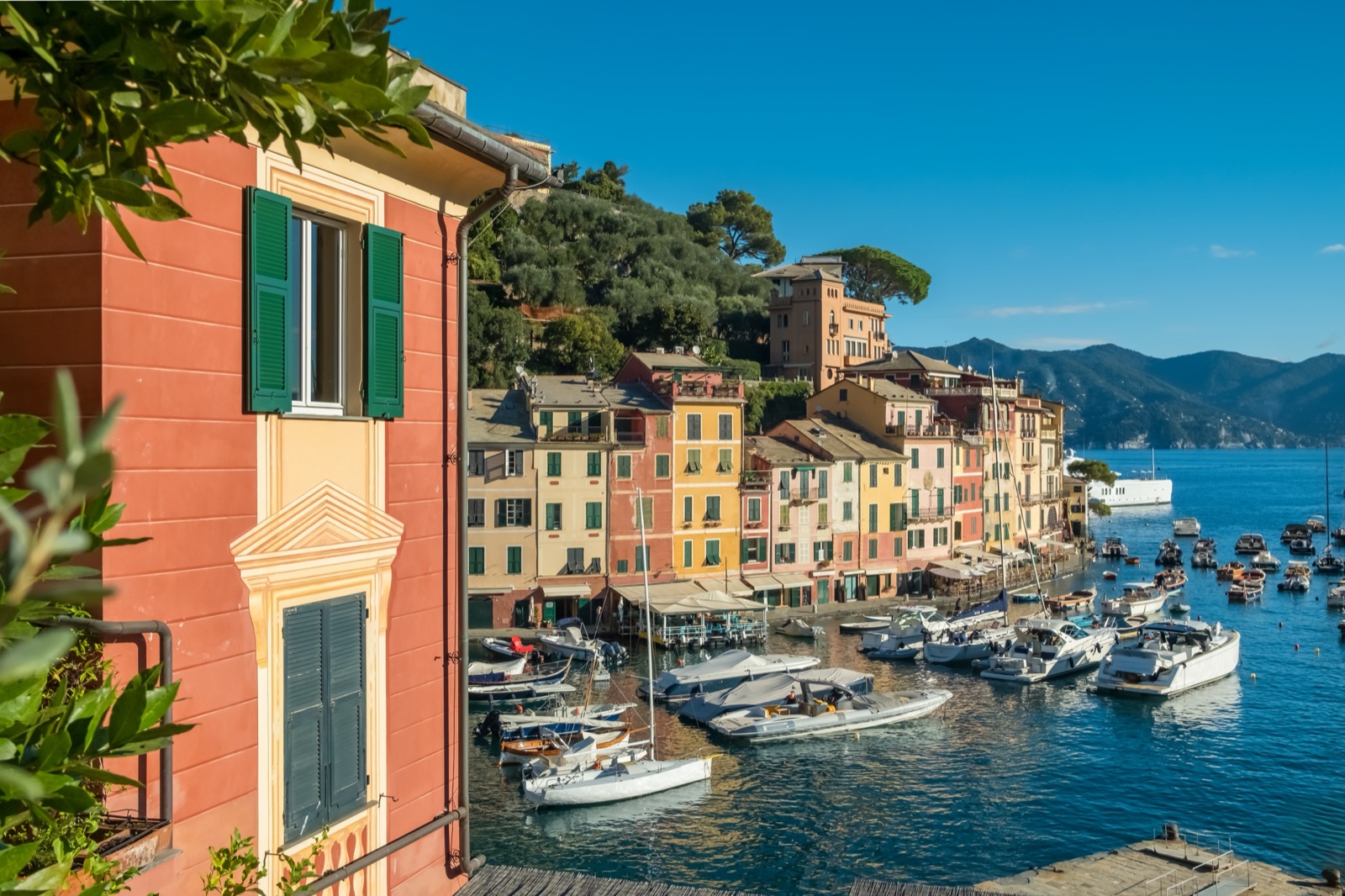
Where to Stay Near Portofino: Portofino, Santa Margherita, Rapallo, Camogli or Genoa
For most visitors the best place to stay for Portofino is Santa Margherita Ligure. It is on the railway, bus 782 runs from its station to Portofino every 15 minutes in summer, ferries leave from its seafront, and you can even walk to Portofino along the coast, about 5 km. Staying in Portofino itself is unforgettable but expensive: in season a hotel room starts at around €700 a night. Rapallo is the larger, often cheaper alternative a little further along the gulf, Camogli suits walkers heading for San Fruttuoso and the park, and Genoa makes sense if you want a city base with the widest choice of rooms and an airport nearby.
This guide compares the options, explains how each one connects to Portofino, and suggests which to choose for your kind of trip. For the transport itself in more detail, see how to get to Portofino.
The options at a glance
| Base | Best for | Getting to Portofino | Trade-offs |
|---|---|---|---|
| Portofino | A special occasion; quiet evenings once the day visitors leave | You are there | Very expensive; few rooms; no railway |
| Santa Margherita Ligure | Most visitors; first trip | Bus 782, ferry, or 5 km on foot | Busy in August |
| Rapallo | Value; trains; a larger town | Ferry, or train to Santa Margherita and bus | Further away; Portofino ferries depend on the sea |
| Camogli | Walkers; San Fruttuoso; a quieter atmosphere | Boat, or over the promontory on foot | Across the headland from Portofino |
| Genoa | City life; airport; museums; budget | Train to Santa Margherita and bus, or boat in season | The longest journey each day |
Staying in Portofino
Portofino is tiny: the comune covers 2.53 km² and had 357 inhabitants in 2026. There are only a handful of hotels and guest houses, from simple rooms above the harbour to some of the most famous hotels on the Riviera, and prices reflect the address. In season a room starts at around €700 a night, and a fish dinner costs at least €100 a person.
Why stay
The reason to stay is the evening. Once the last boats and buses have taken the day visitors away, the piazzetta quietens, the harbour lights come on, and you have the walk to the lighthouse and the castle gardens largely to yourself in the early morning. If you are celebrating something, or simply want Portofino without the crowds, a night or two can be worth the cost.
The drawbacks
- Price: everything, from the room to a coffee at a piazzetta table (€10 or more for two), costs more.
- Access: the historic centre is a limited-traffic zone; drivers must use the covered car park at about €8 an hour or arrange parking with the hotel.
- No railway: every arrival and departure means bus 782, a ferry or a taxi from Santa Margherita.
Ask your hotel about parking and luggage before you arrive; carrying bags through the village is part of the experience.
Santa Margherita Ligure: the best all-round base
Santa Margherita Ligure is the town most people choose, and with good reason. It sits on the Riviera di Levante, on the eastern side of the Portofino promontory at the inner end of the Gulf of Tigullio, about 35 km from Genoa. Its station, Santa Margherita Ligure–Portofino, is on the Genoa–La Spezia line, with trains from Genoa almost every hour and direct trains from Milan in about 2 hours.
Getting to Portofino from Santa Margherita
- Bus 782: in AMT’s 2026 summer timetable (15 June to 13 September) buses left the station every 15 minutes from 8.37. The ride took under 20 minutes, and a single ticket costs €5.00.
- Ferry: boats board at the pier in the gardens of Piazza Martiri della Libertà, about 700 m from the station. The operator’s 2026 fare table lists Santa Margherita–Portofino at €12.00 one way and €20.00 return. In July and August evening boats run to Portofino and back.
- On foot: about 5 km along the coast road and park paths, past La Cervara and Paraggi.
What the town offers
Santa Margherita is a real town with a life of its own: a seafront promenade, a fishing harbour, the seventeenth-century Villa Durazzo with its park, the Basilica of Santa Margherita d’Antiochia and a sixteenth-century castle built against pirate raids. Its beaches run from the Ghiaia area, which has free and private beaches including the accessible Sea for All, to the bay of Paraggi on the border with Portofino. Restaurants and bars stay open in the evening, and prices are more moderate than in Portofino.
More on the town in the Santa Margherita Ligure article.
Where in town
Staying near the seafront or the harbour puts you close to the ferry pier and the bus stop in Piazza Vittorio Veneto, which line 782 calls at on its way to Portofino. Staying near the station is handy if you arrive with luggage or plan day trips by train. The hills above town have villas and gardens looking over the Costa dei Delfini, quieter but with a climb back.
Paraggi: between the two
Paraggi, a hamlet of Santa Margherita on the road to Portofino, is a tiny cove with very clear water, a small sandy beach, the Castello di Paraggi, restaurants and nightspots. It is about 1.5 km from Portofino, and bus 782 stops there. Accommodation is very limited and expensive, but if you find a room here you have the beach on your doorstep and can walk to Portofino’s piazzetta along the seafront in about 20 minutes.
Rapallo: the larger, livelier alternative
Rapallo is the biggest town on this stretch of the gulf and often has more availability and lower prices than Santa Margherita, especially in high season. Its symbol is the castle on the sea, at the eastern end of the Lungomare Vittorio Veneto and joined to land by a causeway; it was built in 1550 after the corsair Dragut sacked the town, and today it hosts exhibitions.
Getting to Portofino from Rapallo
- Ferry: the Tigullio line links Rapallo, Santa Margherita Ligure, Portofino and San Fruttuoso almost all year. Rapallo to Santa Margherita is listed at €6.00 one way and €9.00 return in the 2026 fare table. In July and August evening boats run from Rapallo to Portofino and back.
- Train and bus: one stop by train to Santa Margherita Ligure, then bus 782.
- By car: from the Rapallo motorway exit Portofino is about 8 km, though parking at the far end is the problem.
Rapallo works well if you are driving, as it is right by the motorway exit, or if you want a larger town with more shops and restaurants. It is a stop on the same railway line, so if your train does not stop at Santa Margherita, Rapallo will be the station.
Camogli: for walkers and San Fruttuoso
Camogli lies on the west side of the promontory, on the Golfo Paradiso, with its tall painted houses along the seafront, a small harbour where fishing boats moor beside the ferries, and a town beach below the promenade. It is on the railway, and from the station the start of the walk towards San Fruttuoso is about 300 m.
Getting to Portofino from Camogli
- Boat: Golfo Paradiso’s 2026 fare from Camogli to Portofino is €13.00 one way and €21.00 return, and its boats to San Fruttuoso and Punta Chiappa run all year from Camogli.
- On foot: across the promontory. Stage 10 of the Sentiero Liguria, from Portofino to Camogli, takes 6 h; see the Portofino hiking trails guide.
- By train and bus: to Santa Margherita Ligure, then bus 782.
Camogli is the right base if your priority is the park’s paths, San Fruttuoso and the Christ of the Abyss, or a quieter, more local seaside town. It is less convenient for Portofino itself, which is on the far side of the headland. Read more in the Camogli article.
Genoa: a city base
Genoa is about 35 km from Santa Margherita. Staying in the city gives you the widest choice of hotels, the old town, museums and restaurants, and the airport close at hand: the Volabus links it with Brignole and Piazza Principe stations in about 30 minutes. From either station, trains run to Santa Margherita Ligure almost every hour.
The cost is time: allow well over an hour each way to Portofino by train and bus. In season, boats from Genoa’s Porto Antico run along the coast to Portofino, and a boat trip from Genoa with free time in Portofino is one of the easiest days out from the city; see the tours page. For airport connections, see the nearest airport to Portofino guide.
Which base for which trip?
| Trip | Where to stay |
|---|---|
| Two or three days, first visit, no car | Santa Margherita Ligure |
| A special night or a honeymoon | Portofino |
| Driving, on a budget | Rapallo |
| Hiking and San Fruttuoso | Camogli |
| City break with a day on the Riviera | Genoa |
| Beach holiday | Santa Margherita Ligure or Paraggi |
Sample stays
Two nights in Santa Margherita
On the first day, take bus 782 to Portofino in the morning, walk to the lighthouse and Castello Brown, and return by ferry in the afternoon. On the second, take the boat to San Fruttuoso, visit the abbey and walk back over the promontory, or spend the day on the beaches at Paraggi and in town. In the evenings Santa Margherita’s seafront gives you a choice of restaurants without the Portofino prices.
Three nights, two bases
Spend two nights in Santa Margherita for Portofino and Paraggi, then move to Camogli for a third night: walk up to San Rocco and down to Punta Chiappa, take the boat to San Fruttuoso, and catch the train home from Camogli station. Moving base once means no backtracking, and it puts each walk on your doorstep.
A night in Portofino
If you are going to spend one night in Portofino, make it the middle night of a longer stay, so that you arrive by ferry in the afternoon as the day visitors leave, have dinner on the harbour, walk to the lighthouse early the next morning, and leave before the first boats come in. That way you get the village at its quietest for the price of a single night.
Getting around without a car
You do not need a car anywhere on this stretch of coast, and in summer it is often a hindrance:
- Trains link Genoa, Camogli, Santa Margherita Ligure and Rapallo on the same line.
- Bus 782 links Santa Margherita station with Paraggi and Portofino.
- Ferries link Rapallo, Santa Margherita, Portofino and San Fruttuoso, and Golfo Paradiso’s boats link Camogli with Punta Chiappa, San Fruttuoso and Portofino.
- Footpaths link everything, if you have the legs: the park’s paths cross the promontory between Portofino, San Fruttuoso, Camogli and Santa Margherita.
If you do drive, choose a hotel with parking and leave the car there: the road into Portofino is narrow, and the village car park is small.
When to book
The season runs from spring to autumn, and July and August are the busiest months, when beaches, boats and hotels fill up and prices peak. Book early for those months and for weekends in June and September. Outside summer, ferries run less often and some hotels close for part of the winter, but prices fall and the villages are calmer; the bus runs all year. The Portofino weather page has the climate month by month.
Evenings and getting back
Wherever you stay outside Portofino, check how you will get back after dinner:
- Bus 782 is the fallback when the sea is rough, but check the last departure from Portofino for your date.
- Evening boats link Rapallo and Santa Margherita with Portofino in July and August only.
- Walking back to Santa Margherita along the road at night is not recommended; take the bus.
Budget tips
- Stay in Santa Margherita or Rapallo and eat in Portofino once, at lunch rather than dinner.
- Use the bus: €5.00 a ride, against €12.00 one way by ferry.
- Travel by train: driving adds parking charges of about €8 an hour in Portofino.
- Go in June or September: the sea is still warm and rooms are easier to find than in August.
Questions to ask when booking
- Parking: is it included, and where is it? In Portofino this matters most.
- Distance to the station or ferry pier: worth knowing if you are arriving with luggage.
- Stairs and lifts: many buildings on this coast are old and built on slopes.
- Air conditioning: useful in July and August.
- Seasonal opening: out of season, check that the hotel’s restaurant and beach club are open.
Tourist tax
Portofino, Santa Margherita Ligure, Rapallo, Camogli and Genoa all charge a tourist tax per person per night, set by each comune and collected by your accommodation. Rates and exemptions vary by town and type of accommodation, so check with your hotel when you book.
With children
Santa Margherita is the easiest base with children: level seafront, town beaches, the Villa Durazzo park, and an easy bus ride to Portofino. Camogli’s beach is right below the town, which also suits families.
Accessibility
Santa Margherita’s Ghiaia area has Sea for All, a free beach equipped for people with disabilities, and the town’s seafront is level. Bus 782 is the most accessible way to Portofino. Camogli and Portofino involve steps and slopes away from the waterfront.
Frequently asked questions
Is it better to stay in Portofino or Santa Margherita?
Santa Margherita suits most visitors: it is on the railway, cheaper, and bus 782 reaches Portofino in under 20 minutes. Stay in Portofino for the evenings and early mornings, if the budget allows; in season a room starts at around €700 a night.
How far is Santa Margherita Ligure from Portofino?
About 5 km along the coast, covered by bus 782, the ferry or on foot.
Is Rapallo a good base for Portofino?
Yes, especially by car or on a tighter budget. Ferries link Rapallo with Santa Margherita and Portofino, and the train reaches Santa Margherita in one stop.
Can I stay in Genoa and visit Portofino?
Yes. Trains run from Genoa Principe and Brignole to Santa Margherita Ligure almost every hour, and boats run from Genoa’s Porto Antico to Portofino in season.
Where should I stay for hiking near Portofino?
Camogli, for the paths from San Rocco and the boats to San Fruttuoso and Punta Chiappa, or Portofino itself for the path to San Fruttuoso.