Portofino Beaches: Paraggi, Baia Cannone, Niasca, San Fruttuoso and Where to Swim
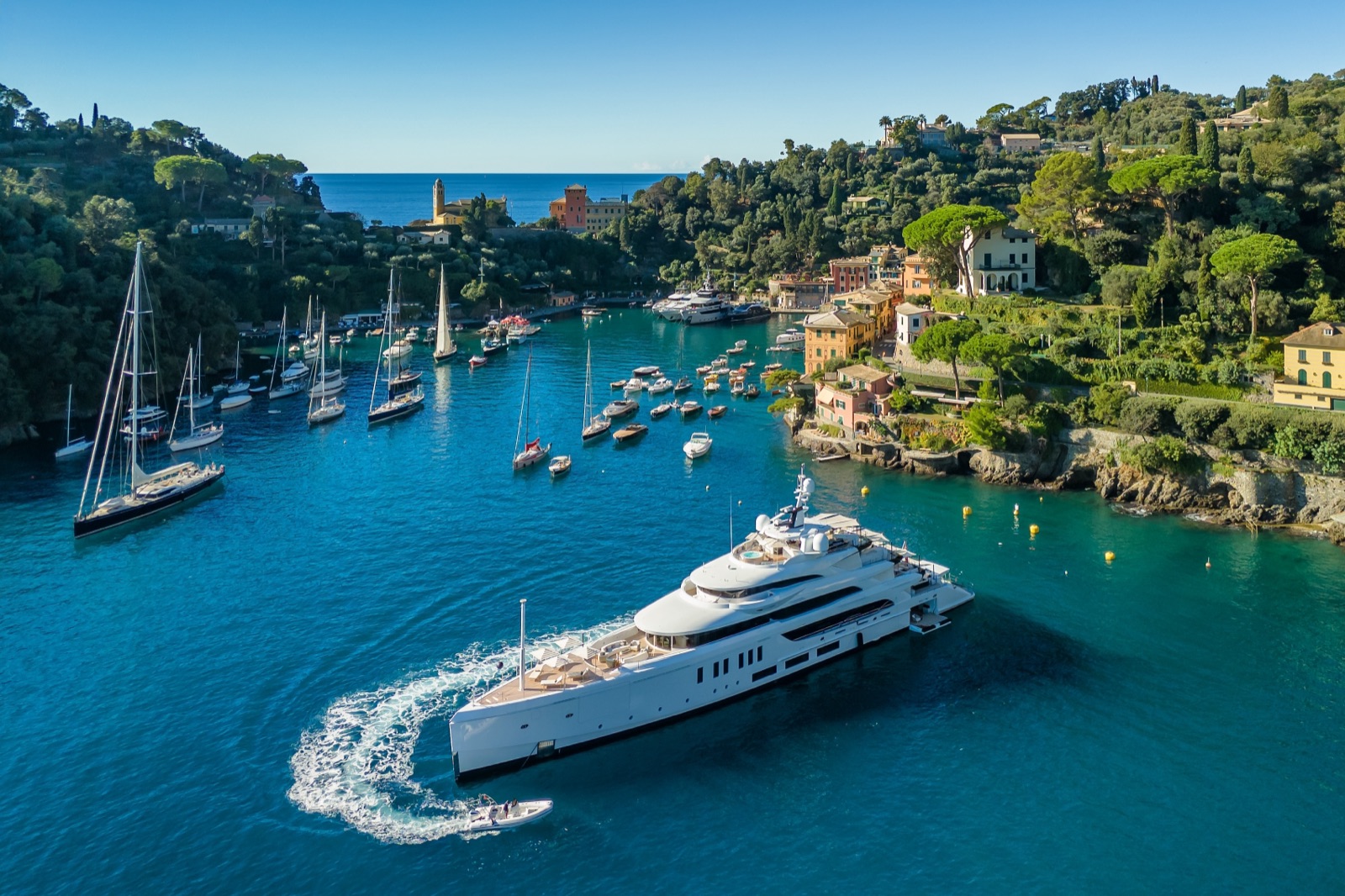
Portofino itself has no real beach. The village wraps around a harbour full of boats, and the nearest places to swim are small rocky inlets just outside it: Baia Cannone, about 500 m from the piazzetta, and Niasca, a tiny bay reached by steps. The one sandy beach close by is at Paraggi, about 1.5 to 2 km away on the road to Santa Margherita Ligure, a small cove of clear green water with a public stretch and private beach clubs. Further afield, San Fruttuoso has a pebbly beach below its abbey, Punta Chiappa offers flat rocks and clear water, and Camogli and Santa Margherita have longer town beaches with services. All of this coast lies in or next to the Portofino marine protected area, which has its own rules on swimming, snorkelling and diving.
This guide goes through each spot, what to expect there, how to get to it and the rules of the marine park. For the village itself, see the Portofino village guide.
Portofino’s beaches at a glance
| Spot | Distance from Portofino | What it is | Services |
|---|---|---|---|
| Baia Cannone | About 500 m | Rocky inlet, stones | None: no sand, cabins, showers or lifeguards |
| Niasca | Between Portofino and Paraggi | Tiny bay reached by steps | None |
| Paraggi | About 1.5 – 2 km | Small sandy cove | Public area and private beach clubs |
| San Fruttuoso | By boat or on foot | Pebble beach below the abbey | Village with bars and restaurants |
| Punta Chiappa | By boat from Camogli or on foot from San Rocco | Flat conglomerate rocks | Very few |
| Camogli | Across the headland | Town beach below the painted houses | Town facilities |
| Santa Margherita Ligure | Bus 782 or ferry | Free beaches and beach clubs | Full, including an accessible beach |
Can you swim in Portofino?
Yes, though not in the harbour, which is busy with boats. The places to swim are the inlets outside the village, all within the marine protected area, and they are rocks and stones rather than sand. That suits snorkellers: the water is clear, and the protected seabed is home to a high level of biodiversity, with ravines, caves and sheer cliffs.
The sea is warmest from July to September. ARPAL’s coastal surveys found Ligurian sea surface temperatures always between 14 °C and 27 °C across the years studied, lowest around February and highest between July and August. Genoa’s tourism site gives the September sea temperature as about 23 °C, which makes early autumn a good time for a swim with fewer people. The Portofino weather page has the current forecast.
Baia Cannone
The closest swimming spot to the piazzetta is Baia Cannone, about 500 m away. It is a rocky cove rather than a beach: there is no sand, and there are no cabins, showers or lifeguards. The stones call for water shoes, and you will need to bring everything you want with you.
What it offers instead is clear water a short walk from the village, a good alternative to the busy harbour front in summer. Go early in the day, as there is little room to spread out, and take care getting in and out on the rocks if the sea is moving.
Niasca
Coming from Portofino, before Paraggi, is Niasca, a tiny bay without services reached by a flight of steps from the road. It is small, so arrive early in peak season. As with Baia Cannone, bring water, shade and water shoes.
Paraggi: Portofino’s sandy beach
Paraggi is the beach most people mean when they ask about swimming at Portofino. Leaving Santa Margherita Ligure on road 227 towards Portofino, you reach this hamlet of Santa Margherita, a tiny inlet with very clear green water. It holds the Castello di Paraggi, a nineteenth-century adaptation of a Genoese fortress, a small and exclusive sandy beach, restaurants and nightspots.
Public beach and beach clubs
Paraggi is a public beach, but it also has private beach clubs, which take up much of the sand in summer. The free area is small and fills quickly. If you want a sunbed and umbrella, book a beach club ahead in high season; if you want to swim for free, arrive early.
Snorkelling and diving
The bay of Paraggi lies inside the marine protected area and is suited to snorkelling, freediving and diving, between steep rocky seabeds and Posidonia meadows. It is popular with divers because its seabed suits the growth of red coral.
Getting there
Bus 782 stops at Paraggi. You can park at Paraggi and walk to Portofino’s piazzetta along the seafront in about 20 minutes, though the car park is small and fills early in summer. The park’s footpath from Paraggi to Portofino, 1.7 km and 40 to 50 minutes, is a quieter alternative to the road. If you would rather be on the water, the kayak tour to Portofino starts from Paraggi and paddles to Portofino harbour and towards the lighthouse, with an optional snorkel.
San Fruttuoso
On the far side of the headland, San Fruttuoso has a small pebble beach right below the abbey and the Doria tower. The hamlet can be reached only by boat or on foot, which keeps it from being overrun, although boats bring plenty of day visitors in summer. The way from the boat landing to the abbey crosses a stretch of beach between flights of steps.
Offshore lies the bronze Christ of the Abyss, placed in the bay in 1954. After restoration it stands on a new base at 14.4 m, with its raised hands about 10 m below the surface. Snorkellers can sometimes make it out from above on calm, clear days; the dive itself must be made with guides registered with the Liguria Region, as it lies in the protected area.
Boats link San Fruttuoso with Portofino on the Tigullio line, at €12.00 one way and €20.00 return in the operator’s 2026 fare table, and with Camogli all year. If rough seas stop the boats from Camogli, the abbey stays closed. Full details are in the San Fruttuoso guide.
Punta Chiappa
Punta Chiappa, on the Camogli side of the promontory, is a huge slab of conglomerate running into the sea. Its flat rocks make it one of the best places on the promontory to sunbathe and swim off the rocks, with very clear water. There is a rustic altar to the Stella Maris here, the goal of a procession of boats from Camogli on the first Sunday of August.
You can get there two ways:
- By boat from Camogli: Golfo Paradiso’s 2026 full fare is €7.00 one way and €12.00 return, and boats land at Porto Pidocchio, a tiny inlet beside the point.
- On foot from San Rocco: 2.1 km, all downhill with about 220 m of descent, graded T by the park. The climb back is the hard part, so many people walk down and take the boat back.
Camogli
Across the headland from Portofino, Camogli has a proper town beach right below its famous painted seafront. From the centre, narrow stairways between the tall coloured houses lead straight down to the beach, with bars, cafés and small restaurants along the promenade above. It is pebbly, lively in summer and easy to reach by train, which makes it a good beach day without a car. The town itself is covered in the Camogli article.
Santa Margherita Ligure
Santa Margherita has the most beach choice in the area. In the Ghiaia area there are free and private beaches, including Sea for All, a free beach equipped for people with disabilities. From the back of the port a long strip of beach clubs, alternating with free beaches, runs east to the edge of the marine protected area. Woof Woof Beach, at Punta Pedale, is an area for going in the sea with dogs, looked after by volunteers. Further on, up to the border with Portofino, comes the bay of Paraggi.
Santa Margherita is also the most practical base: the beaches are a short walk from the station, and bus 782 or the ferry take you on to Portofino. See where to stay near Portofino.
The marine protected area: rules for swimmers
The Portofino marine protected area was established in 1999 and covers 346 ha of sea off Camogli, Portofino and Santa Margherita Ligure. It is divided into three zones:
- Zone A: the integral reserve at Cala dell’Oro, between Punta Torretta and Punta del Buco. Swimming and underwater activities are banned.
- Zone B: from the Portofino lighthouse point to Punta Chiappa, apart from the access corridor and roadstead of San Fruttuoso. Swimming and snorkelling are allowed; diving needs the managing body’s permission.
- Zone C: on both sides of the promontory. Swimming, snorkelling and diving are allowed.
The marine park’s own rules page sets out what applies everywhere:
- Swimming and snorkelling are allowed in zones B and C, except in the areas marked red on the map.
- Spearfishing is banned throughout the protected area, and harpoons or underwater knives may not be brought onto its beaches or into its waters.
- Taking or disturbing marine life is not allowed.
- Anchoring is banned in the protected area.
The managing body’s map shows the zones and red areas; check it if you plan to swim away from the usual spots.
Snorkelling, kayaking and other activities
Santa Margherita’s tourist portal lists swimming, freediving, snorkelling, canoeing, kayaking, SUP, windsurfing, sailing and scuba diving as activities in the protected area. For most visitors the best options are:
- Snorkelling at Paraggi and off the rocks at Punta Chiappa, on calm mornings.
- Kayaking along the coast between Paraggi and Portofino, where you can see the cliffs and coves that are hard to reach on foot.
- Diving with a registered dive centre, for the Christ of the Abyss and the red coral walls.
Getting around the beaches
| From | To | How |
|---|---|---|
| Santa Margherita Ligure | Paraggi, Portofino | Bus 782 (stops at Paraggi); ferry to Portofino |
| Portofino | Baia Cannone, Niasca | On foot |
| Portofino | San Fruttuoso | Boat, or on foot in 2 – 2 h 15 |
| Camogli | Punta Chiappa, San Fruttuoso | Golfo Paradiso boats, all year from Camogli |
Bus 782 is the cheapest way along the coast: AMT’s single ticket costs €5.00 for one ride between Santa Margherita and Portofino. Boats depend on the sea, and sailings can be cancelled when it is rough. More on all of these in getting to Portofino.
When to go to the beach
- June and September: the best balance of warm water and fewer people. The boats from Camogli run every hour from 9:00 in both months.
- July and August: the warmest sea and the busiest beaches; arrive before mid-morning at Paraggi, Baia Cannone and Niasca. Summer thunderstorms can bring a sudden change in sea conditions.
- October: still pleasant on calm days, with the sea cooling slowly, but more frequent rain and sea storms.
In early July 2025 a sea storm brought a sudden drop of 4–5°C in the sea surface temperature, a reminder that conditions can change quickly even in summer.
What to bring
- Water shoes: essential at Baia Cannone, Niasca and Punta Chiappa.
- Mask and snorkel: the water is clear and the seabed protected.
- Shade and water: there are no services at the rocky spots.
- Cash or card: for a sunbed at Paraggi or a drink at San Fruttuoso.
- A bag for rubbish: take everything home with you.
Tips for a good beach day
- Go early: the small coves fill quickly, and the roads and buses get busier as the day goes on.
- Watch the sea: on rough days the rocks are dangerous and the boats may not run.
- Combine with a walk: walk from Portofino to San Fruttuoso, swim, and take the boat back; see the Portofino hiking trails guide.
- Respect the protected area: no spearfishing, no collecting shells or sea creatures, and keep off the Posidonia when you get in and out.
Two beach days to try
Portofino and Paraggi
Take bus 782 from Santa Margherita Ligure to Portofino in the morning and walk out to Baia Cannone for an early swim before the coves fill up. Back in the village, have lunch away from the piazzetta tables, then walk the park path from Portofino to Paraggi in the cooler late afternoon, 1.7 km and 40 to 50 minutes, and finish with a swim in Paraggi’s clear water. Bus 782 stops at Paraggi for the ride back to Santa Margherita.
Camogli, Punta Chiappa and San Fruttuoso
Start in Camogli, which is on the railway, and take a Golfo Paradiso boat to Punta Chiappa for a morning on the rocks. Continue by boat to San Fruttuoso for lunch, the abbey (€10) and an afternoon swim from the pebble beach below the Doria tower, then sail back to Camogli. Check the last boat from San Fruttuoso before you go: in 2026 it left at 18:00 in June and September and at 19:00 in July and August.
Safety in the water
- No lifeguards at the rocky coves: swim within your limits and never alone.
- Boats: keep close to the shore and away from the channels used by ferries and tenders, especially around Portofino harbour and San Fruttuoso.
- Rough seas: the coast faces the open sea, and after a storm the swell can make getting out over rocks difficult. If in doubt, stay out.
- Jellyfish and sea urchins: water shoes help on the rocks, and a look at the water before you get in is worth it.
- Sun: the rocks reflect heat, and there is little natural shade at Baia Cannone or Punta Chiappa.
With children
Paraggi’s sand and the town beaches at Santa Margherita and Camogli are the easiest with children. Baia Cannone, Niasca and Punta Chiappa are rocky, with no lifeguards, so they are better suited to confident swimmers.
Accessibility
Sea for All, the free beach in Santa Margherita’s Ghiaia area, is equipped for people with disabilities. Most of the coves around Portofino involve steps or rocks, and the boats to San Fruttuoso and Punta Chiappa involve steps at the landings.
Frequently asked questions
Does Portofino have a beach?
Not in the village itself. The nearest spots are Baia Cannone, about 500 m away, and Niasca, both rocky. The nearest sandy beach is Paraggi, about 1.5 to 2 km away.
Is Paraggi beach free?
Paraggi is a public beach, but private beach clubs take up much of it, and the free area is small. Arrive early in summer.
Can you snorkel at Portofino?
Yes. Snorkelling is allowed in zones B and C of the marine protected area, outside the areas marked red, and Paraggi is one of the best spots.
Where can you swim near San Fruttuoso?
There is a small pebble beach below the abbey, and Punta Chiappa nearby has flat rocks and clear water, reached by boat from Camogli.
Is spearfishing allowed at Portofino?
No. Spearfishing is banned throughout the Portofino marine protected area.