Reference
Portofino Weather: Where It Is and the Best Time to Visit
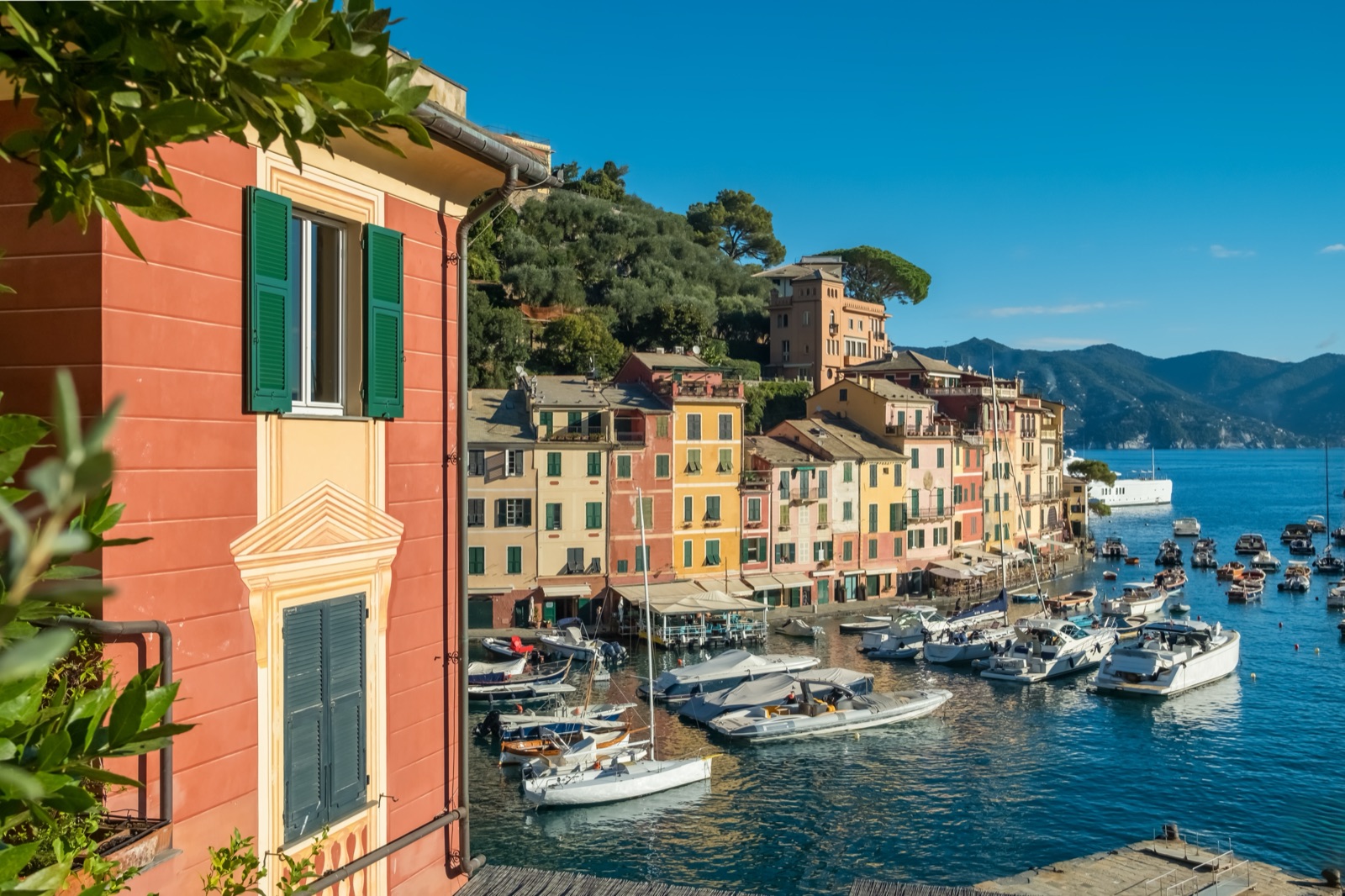
Portofino is on the Italian Riviera in Liguria, in the Metropolitan City of Genoa. The village sits in a small bay at the southern tip of the Portofino promontory, east of Genoa, where the Golfo Paradiso ends and the Gulf of Tigullio begins. Its weather is Mediterranean: mild winters and warm summers, with the sea at its warmest in July and August and rain most frequent in October and November.
For most visitors the best time is late May to June or September. The sea is warm enough to swim, the boats run on their fuller timetables, and the heat and crowds of high summer are easier to avoid. This article explains where Portofino is, what the weather does month by month, how warm the sea gets, what autumn storms can do to the road and the ferries, and when the boats and buses run.
The short answer
- Where: Liguria, north-west Italy, on the Italian Riviera east of Genoa, at the tip of the Portofino promontory.
- Warmest months: July and August, with average highs of about 27°C on the nearest long record, in Genoa.
- Most frequent rain: October and November.
- Sea: coldest around February, warmest in July and August; about 23°C in September.
- Best for swimming and boats: June to September.
- Best for walking: spring and autumn.
- Always check: the sea state, since rough weather cancels ferries.
Where is Portofino?
Portofino is a comune in the Metropolitan City of Genoa on the Italian Riviera. It covers 2.53 km² and has 357 inhabitants (31 May 2026), so it is a village rather than a town. It lies in the western part of the Gulf of Tigullio, in a bay at the foot of the promontory of the same name, marking the geographical border between the Golfo Paradiso and the Tigullio. The whole territory of the comune lies inside the Portofino regional park and the Portofino marine protected area.
This stretch of coast is the Riviera di Levante, the Riviera east of Genoa. Camogli sits on the western side of the same promontory, and Santa Margherita Ligure, the last town before Portofino on the eastern side, is about 35 km from Genoa.
Getting there in brief:
- Nearest station: Santa Margherita Ligure–Portofino on the Genoa–La Spezia line; from there take bus line 782, a ferry or the coastal walk.
- From Genoa: trains run from Genoa Principe and Brignole to Santa Margherita Ligure almost every hour.
- From Milan: direct Intercity or regional trains reach Santa Margherita Ligure–Portofino in about 2 hours.
- By car: from the Rapallo motorway exit, Portofino is about 8 km away, following the signs.
Our guide to getting to Portofino covers every option, and our article on Santa Margherita Ligure covers the town most visitors use as a base.
Where the weather figures come from
This article uses Genoa’s long-term averages, the nearest published climate record we found for this coast. The city’s tourism site publishes monthly averages from the historic weather station in via Balbi, run by the University of Genoa (DISTAV), and those are the figures used below. Treat them as a guide to the coast rather than an exact forecast for the village: Portofino sits in a sheltered bay on the same stretch of Riviera, but any given day can differ.
On those figures Genoa has a Mediterranean climate, with average temperatures of around 11°C in January and 27°C in August. The average gap between the day’s maximum and minimum is only 5.4 degrees, one of the lowest in Italy. Rain is most frequent in October and November and averages 1,300 mm a year.
Month by month
Average maximum and minimum in Genoa, from the via Balbi station:
| Month | Average high | Average low |
|---|---|---|
| January | 11.1°C | 6.1°C |
| February | 11.8°C | 6.6°C |
| March | 14.1°C | 8.8°C |
| April | 16.7°C | 11.3°C |
| May | 20.4°C | 15.0°C |
| June | 23.8°C | 18.3°C |
| July | 26.7°C | 21.1°C |
| August | 27.0°C | 21.3°C |
| September | 24.1°C | 18.3°C |
| October | 20.0°C | 14.7°C |
| November | 15.1°C | 10.2°C |
| December | 12.0°C | 7.1°C |
And what that means for a visit:
- January and February: the coolest months, and the sea is at its coldest around February. Quiet streets, bare boat timetables. From 1 November to 31 March Castello Brown opens 10:00–16:00; in January only at weekends, 10:30–17:30.
- March: mild days and the first longer boat trips. In 2026 Golfo Paradiso’s two-gulfs trip from Genoa to Portofino started its season in March.
- April: spring proper, with average highs of 16.7°C. Castello Brown opens 10:00–19:00 from 1 April to 31 May. St George’s Bonfire is held on 23 April, for the village’s patron saint.
- May: warm enough to sit out in the piazzetta, with average highs of 20.4°C, and one of the best months for walking the headland. Camogli’s Sagra del Pesce falls in May; in 2026 it ran on 8, 9 and 10 May.
- June: the start of summer. Castello Brown stays open 10:00–21:00 from 1 June to 30 August, and AMT’s summer timetable for bus 782 ran from 15 June to 13 September 2026, with buses every 15 minutes through the day.
- July and August: the hottest months, with average highs of 26.7°C and 27.0°C, the warmest sea and the biggest crowds. In July and August evening boats run from Rapallo and Santa Margherita Ligure to Portofino and back. Camogli’s Stella Maris festival falls on the first Sunday of August.
- September: still summer at sea, with the water about 23°C and average highs of 24.1°C, but with the hottest weeks behind it. Castello Brown opens 10:00–19:00 in September.
- October: average highs of 20.0°C and good walking weather, but the rain becomes more frequent. In October Castello Brown opens 10:00–18:00.
- November and December: wet and mild, with the shortest days and the thinnest timetables. A Mass is celebrated in the abbey church of San Fruttuoso every year on 24 December.
The sea: how warm, and when to swim
The Ligurian Sea follows a steady yearly rhythm. ARPAL, Liguria’s environmental agency, measured surface temperatures at 76 stations along the Ligurian coast from 2002 to 2018. In every year of the series the values stayed between 14° and 27°, with the lowest around February and the highest between July and August. Genoa’s tourism site gives the sea surface as about 23°C in September.
Individual summers can run well above or below that pattern:
- Late June 2025: after a long anticyclone, the Ligurian Sea surface reached 27–28°C, with peaks of 29°C.
- Early July 2025: a sea storm brought a sudden drop of 4–5°C.
- 5 August 2025: surface values ranged from 23°C, mostly offshore, to 26°C in the Levante and near the central coast, the stretch that includes Portofino.
- Summer 2025 overall: ARPAL described sea surface temperatures as widely above normal.
On those figures the water is at its most inviting from June to September; May and October are for the hardier. Portofino has no sandy beach in the village itself. Baia Cannone is about 500 m from Portofino and Paraggi about two kilometres; Baia Cannone has no sand, cabins, showers or lifeguards, and its stones call for water shoes. Our Portofino village guide covers the swimming spots in detail.
The water is also exceptionally clear, because it is protected: the Portofino marine protected area was established by ministerial decree on 26 April 1999. Calm summer days are the best for snorkelling and kayaking.
Rain, storms and the sea state
Rain falls in every season, but two kinds of weather really affect a visit.
Autumn rain and sea storms
October and November bring the most frequent rain. This is also the season for sea storms, and they can be severe. The SP227 road between Santa Margherita and Portofino was devastated by the sea storm of 29 October 2018. The collapsed stretch was 120 metres long, the waves opened a hole of 800 cubic metres near the Cervara, and rebuilding the road took just under 160 days. It reopened in April 2019. That was an exceptional storm, but it shows why the single road into the village and the ferries are the first things to check in bad weather.
Summer thunderstorms
Summer is mostly settled, but not always. In summer 2025 frequent thunderstorms, especially in July and August, led to 7 yellow and 2 orange weather alerts in Liguria. Thunderstorms can cancel boats and make the park’s paths slippery.
Checking the alerts
Allerta Liguria, the Regione Liguria civil-protection site, publishes each day’s alert level by zone, from green through yellow and orange to red, alongside ARPAL’s weather bulletins. Check it before a walk over the headland or a day that depends on boats.
When the sea says no
Rough seas matter more here than rain. Sailings can be cancelled in bad sea conditions, and on the longer Tigullio lines departures run only in favourable sea conditions, at the captain’s judgement. The abbey of San Fruttuoso depends on the boats too: if rough seas stop the boats from Camogli, the abbey stays closed. If the sea looks rough from the harbour, keep bus 782 in mind as your way back from Portofino.
When the boats and buses run
Portofino’s season is set as much by the timetables as by the weather.
- The Tigullio ferry, Line 1: links Rapallo, Santa Margherita Ligure, Portofino and San Fruttuoso almost all year, with timetables that vary by season. Departures need at least 20 passengers per boarding point, so out of season some sailings may not run.
- From Genoa: direct ferries from Genoa and other Ligurian towns run in the summer months.
- Evening boats: in July and August only, from Rapallo and Santa Margherita.
- From Camogli: Golfo Paradiso runs boats to San Fruttuoso all year from Camogli, and from Recco from April to September. In November and December 2026 they run every day except Mondays and 25 December 2026.
- The two-gulfs trip: Genoa to Portofino via Camogli and San Fruttuoso, from March 2026, and every day except Mondays in July and September 2026.
- Bus 782: runs all year from Santa Margherita station; the summer timetable is the most frequent.
The pattern is clear: from June to September almost everything runs, and runs often. In spring and autumn most services still run, with fewer departures. In winter the bus becomes the reliable link.
Crowds and timing
Weather is only half of the question. Portofino is tiny, and the time of day matters as much as the month.
- Midday in summer is the busiest time, when the boats and buses arrive. Spend it on the walk to the lighthouse or at Castello Brown.
- Early morning and evening are the quietest, and the light is best. In July and August the evening boats make an evening visit easy from Santa Margherita or Rapallo.
- Keep moving in the busiest spots: Portofino has banned pedestrians from stopping in parts of the pedestrian zone, an anti-selfie measure to prevent crowds and queues.
- Driving in summer is the hardest way to arrive: the covered car park costs about €8 an hour and fills quickly.
The best time for…
- Swimming and boat trips: late June to mid-September, when the sea is warmest and the most boats run.
- Walking the headland: April, May and October, when average highs sit between 16.7°C and 20.4°C. About 80 km of paths cross just over 1,000 hectares of the Portofino park.
- A quiet village: November to March, when Castello Brown keeps short hours and the timetables are thin, but the village is at its quietest.
- Festivals: 23 April for St George in Portofino, May for Camogli’s fish festival, the first Sunday of August for the Stella Maris, and 24 December for Mass at San Fruttuoso.
- A balance of everything: September. The sea is still about 23°C, the boats still run and the heat eases.
If the weather turns
A rough sea or a wet day does not have to waste a trip. A few plans that do not depend on boats:
- Take the bus instead of the ferry. Bus 782 runs from Santa Margherita station to Portofino all year, along the SP227.
- Go up rather than out. Castello Brown is on the path from the piazzetta to the lighthouse, and a ticket for the castle and its park costs €10.00.
- Stay in Santa Margherita. Villa Durazzo is open daily 9:30–13:00 and 14:00–18:00 (the hours its site showed in late September 2026), with its picture gallery and rooms under cover.
- Save the walks for the day after. The park’s paths are old paved or earth tracks, and after heavy rain they are slippery; check Allerta Liguria before setting out.
What to pack
- Water shoes for Baia Cannone and the rocky coves.
- Walking shoes for the paths to the lighthouse, Castello Brown and the park.
- A light layer for the boat, which is always breezier than the quay.
- A rain jacket from October to April.
- Sun protection and water in summer, when even the short walks are hot.
Tours by season
Boat trips are the most weather-dependent way to see Portofino, and the best in settled weather.
Boat from Genoa with free time in Portofino. By boat from Genoa’s Porto Antico along the Ligurian coast, with two hours in Portofino for the piazzetta and Castello Brown. About 5 hours.
Coastal cruise from Rapallo with a Portofino stop. A boat with a shaded sundeck from Rapallo past Santa Margherita Ligure and the cliffs, stopping in Portofino. About 4 hours.
Both depend on the sea state, so book with flexible cancellation terms where you can. The tours page lists them all with live prices.
Frequently asked questions
Where is Portofino?
In Liguria, north-west Italy, in the Metropolitan City of Genoa, on the Italian Riviera east of Genoa. The village sits in a bay at the tip of the Portofino promontory, between the Golfo Paradiso and the Gulf of Tigullio. The nearest station is Santa Margherita Ligure–Portofino.
What is the best month to visit Portofino?
September for most people: the sea is still about 23°C, the boats still run and the summer crowds thin. June is a close second. For walking the headland, choose April, May or October.
How hot is Portofino in summer?
On Genoa’s long-term averages, the nearest published record, July averages a high of 26.7°C and August 27.0°C. The sea is at its warmest between July and August.
When is the rainy season in Portofino?
Rain is most frequent in October and November, and Genoa averages 1,300 mm a year. Autumn is also the season for sea storms, which can cancel ferries.
Do the ferries to Portofino run in winter?
The Tigullio Line 1 runs almost all year, but departures need at least 20 passengers per boarding point and are cancelled in rough seas. Bus 782 from Santa Margherita is the reliable winter link.
Is the sea warm enough to swim in October?
It can be, on calm, sunny days. ARPAL’s coastal records put the warmest sea in July and August and the coldest around February, so October water is cooler than September’s, which Genoa’s tourism site gives as about 23°C.